


Thesis: Creative expertise emerges through slow recombination.
I’m back from a terrific two weeks at the Cortona Sessions, a dense bacchanal of contemporary music.
This year, the theme was Plant-Based, and, taking inspiration from the Dutch predilection for naturalistic planting and rewilding, we used the cycles and habits of our natural world to help frame our work together. Across performances, rehearsals, and premieres of new works, we presented three group classes, each based on one of these processes: Composting, Pollinating, and Incubation. A fourth class was led by visiting composer Tonia Ko, who adroitly tied these talks together with a discussion of her longstanding bubble-wrap practice.
The mission was to give the fellows ideas to help frame their development as creative professionals and contextualize their creative practice, encourage them to connect with one another, take an active role in designing their careers, and recognize the seasonal nature of creative work.
Since Plant-Based was my idea, I led off, highlighting Composting.
Because these classes generated a lot of conversation, I thought I’d share what I foisted upon the unsuspecting fellows and faculty, as the topic is resonant with my usual themes: creativity in the world, artistic influence across disciplines, performance practice, and design. More importantly, I wanted to throw out ideas that might incubate among the fellows over the sessions, and I’ve included my metacognitive waypoints here. In fact, giving the presentation prompted an epiphany that unlocked many years of my own scholarly work.
I think composting is a surprisingly accurate model of how learning itself works.
You might have thought from my paean to the BBC’s delightful Gardeners’ World that I love being outside, tilling soil and pruning crocosmia.

Nope! I’m not a very good gardener, and I am averse to most activities au plein air. Give me a book of maps and a dark room instead. I’m allergic to the sun. But I have noticed that engaging with, slowing down, and noticing our natural world does something to you. It connects you to the seasons; to the planet. And since I don’t like being outside, I will have an artistic compost pile instead of a real one. In fact, I am composting a previous blog post to make this one!
Composting takes material from our gardens that we don’t want, that has spent itself, or is otherwise no longer useful, and lets it sit, incubate, grow, change, and break down. Gardeners don’t actually do most of the work. Millions of fungi and bacteria break down organic matter for them. At the end of the cycle, finished compost can be used to grow new plants, mulch your garden, or propagate seedlings. Gardeners are so excited about compost, and rightly so: it’s free! And many gardeners have a complex composting arrangement that gradually breaks down garden waste into highly nutritious soil.
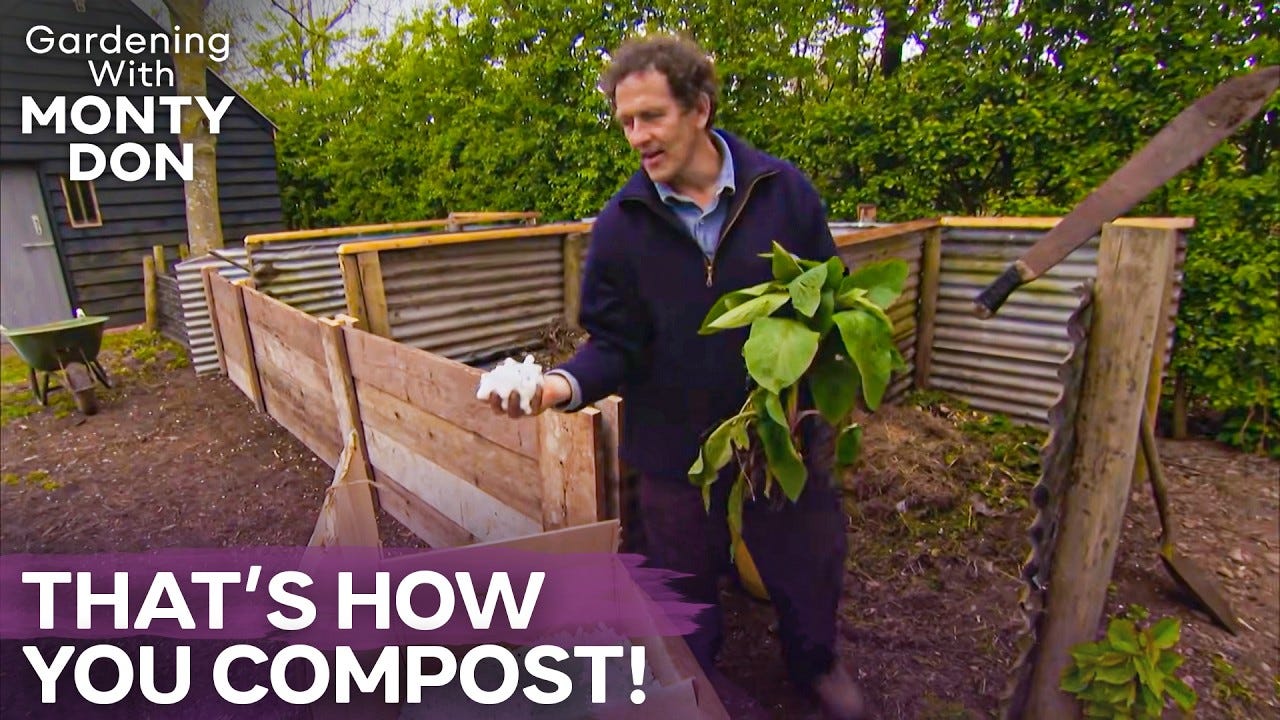
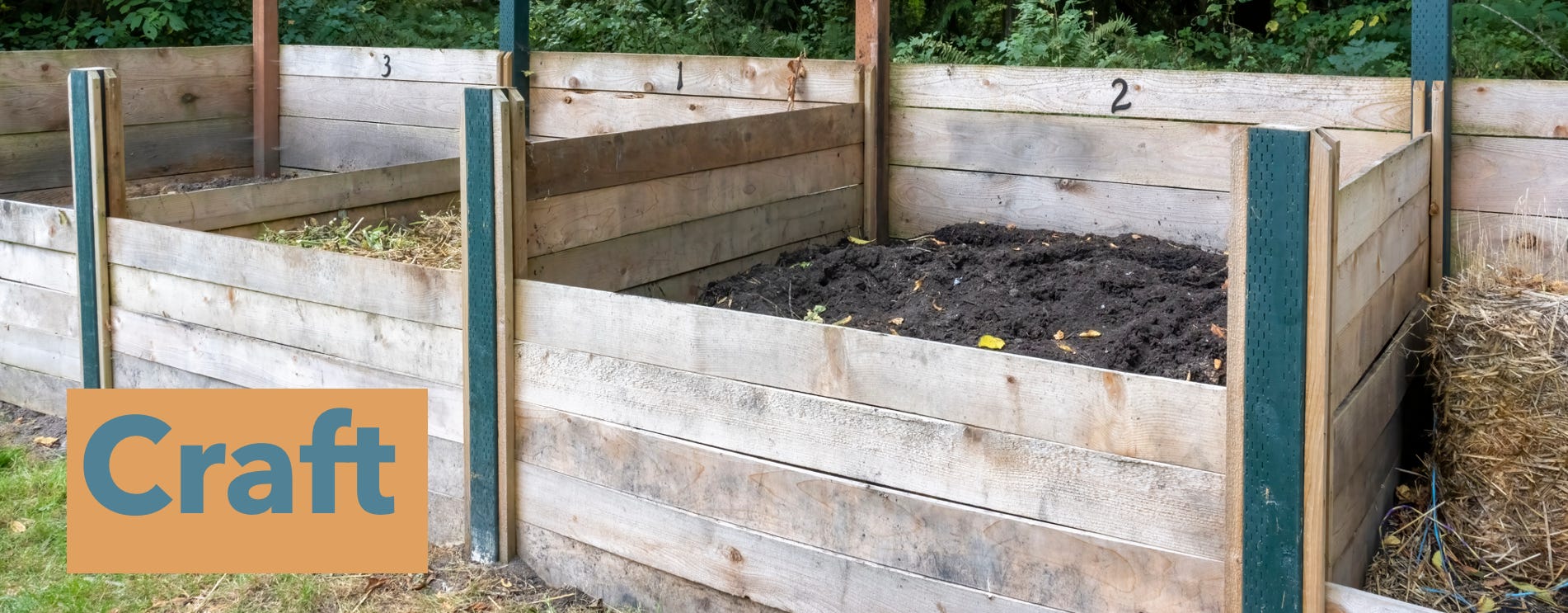
As I’ve argued in previous posts, analogies are essential to how we learn. Juxtaposing two domains allows us to learn something about both. Good enough for Keppler, good enough for me!

Here, composting is a useful analogy for how we hone our craft, how we become ourselves artistically, and how we live within artistic cycles that mirror natural cycles.
Composting transforms everything it receives—dead plants, weeds, kitchen scraps—into something useful.
Isn’t that such a great way to think about how we get our musical craft?
Artists metabolize influences
Learning isn’t simply the accumulation of knowledge. It’s the transformation of experience. We don’t stack ideas neatly on top of one another. We decompose them, combine them with other experiences, discard parts, rediscover them years later, and eventually build something that no longer resembles its ingredients.
Action item
Musical development can feel immediate and urgent, particularly in school. But our artistic identities are designed slowly. This summer, I encouraged Cortona fellows to be intentional about what they carry forward, what they discard, and what they allow to decompose into something new.
Composting also teaches patience. Most of the work happens out of sight, and you often don’t realize it’s finished until the process is nearly complete. Meanwhile, the compost pile runs hot with the activity of fungi and bacteria. Musical learning does, too: it takes an unpredictable amount of time, follows an immensely circuitous path, and sizzles with epiphanies.
“I’ll check back on this every month, and in three years it might be great” is not something a classical musician wants to hear from a teacher or coach. But it’s a best practice in composting.
We tend to judge learning by its visible milestones, but the processes that make those moments possible often unfold quietly over months or years. After the initial work, compost develops on its own, and trying to hurry the process usually does more harm than good. Like compost, learning isn’t merely additive; it’s transformative. Ideas need time to interact, decay, and recombine before they become something new. Just remember that results are often a lagging indicator of effort…
Patience, observation, care, and focus are habits cultivated through artistic composting. We borrow them from teachers, colleagues, books, and experiences, then gradually reshape them into our own ways of working. These habits become the mental models that support both creative practice and peak performance.
Experienced gardeners and musicians aren’t necessarily more patient than everyone else. They let the joy of daily learning pull them toward long-term goals. Learning to notice those small changes is itself part of creative practice.
Identifying Impatience and Habits
Naming your impatience is easy. Understanding it is harder. It’s useful to ask oneself: what are the habits of my creative work? What habits am I trying to develop? And what habits am I trying to kick?
If you don’t know what your habits are, I recommend tracking your time: who we are is a reflection of what we spend the most time doing, and who we spend the most time around.
If you’re interested, I have experimented on myself on your behalf, tracking my time over years, months, days, hours, and minutes to identify habits, manifest new routines, and discard deleterious practices.

Composting also reminds us that creative work is seasonal. We plant the seeds of a project, water them, incubate them, then harvest those ideas before using the produce to inspire new ideas. Different projects occupy different seasons, but none can be rushed. Plant too early, harvest too soon, or ignore soil conditions, and the work suffers.
Designing a creative life means respecting those seasons, making perfectly timed adjustments in response to feedback, and trusting that incubation is part of the work.
Coda: A Practical Example!
Here endeth my presentation. Thanks for reading this far.
But, in the days after sharing my thoughts on composting, I had an epiphany that explained how seemingly disparate influences in my life had been composted together into valuable ideas. A practical, personal example.
In college, I studied American history alongside music. At the time, the connection wasn’t obvious, but years later, I realized those two fields had been quietly composting together. After a conversation with vocal superstar Christie Finn over broodjes, I suddenly understood the composting that had taken place in my own thinking, centering on how we read texts for multiple interpretations, and how creative works emerge from communities, societies, and cultures.
The documents surrounding the founding of the US (the Declaration of Independence, the Constitution, the Federalist Papers, etc.) are elegantly written yet endlessly debated. Their language is clear, but their meanings remain contested. That unarticulated realization had changed how I thought about “reading” musical texts. For example, despite their extremely high NOTATED scores and myriad polemical writings attempting to clarify a kind of performance practice, it’s still very difficult to tell what post-war modernist composers meant. A composer’s stated intentions are only one piece of the larger context surrounding a work.
Likewise, someone reading the writings of Jefferson, Madison, Jay, et al. might be inclined to think that these authors must have been struck by a bout of innovation never before seen in humankind, a fever dream of the Enlightenment. Not really. The Founders didn’t invent every idea they expressed. They were shaped by Locke, Hume, Montesquieu, Blackstone, and the intellectual climate around them. Creative work rarely emerges in isolation; it grows out of communities and shared ideas.
We often place significant emphasis on the Great Man theory in relation to societal, artistic, and other forms of development. Of course, individuals matter. But artistic ideas also emerge from communities, cultures, and historical moments. Ignoring those surrounding influences means missing much of what gives creative work its meaning.
Looking back, I can finally see what years of artistic composting produced. I’m designing classes for Arizona State University around how creatives learn from the world around them and how to read text and metatext across disciplines; studying how performance practice is influenced by a confluence of metatextual parameters; writing on multidisciplinary musical learning; and collaborating with composers on new works that enact this dynamic process.
My intuition had drawn me towards exploring works with contextual richness (the American Revolution) and creative immediacy (contemporary music), but it took years of composting before those connections became visible. Learning wasn’t the accumulation of two separate areas of expertise; it was their gradual transformation into a third way of thinking that neither field could have produced on its own.
When I was a young writer and reader, I came across the phrase "cross-fertilization of ideas" and that seems like it fits with your plant-based metaphor.